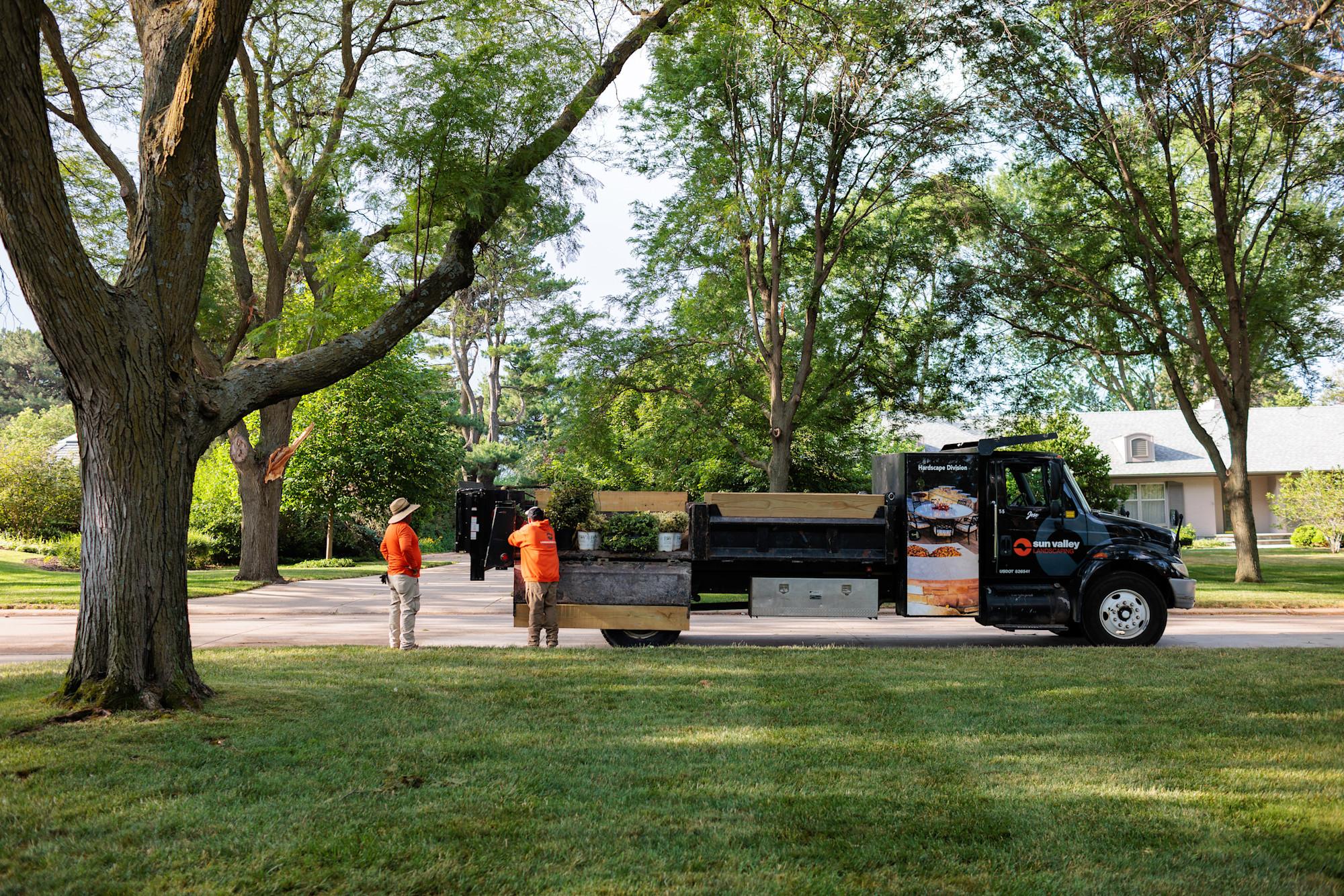
Featured image credit: Colin Conces, Sun Valley Landscaping
Paul Fraynd, a veteran of nearly 25 years in the landscaping business, has seen commodity spikes. He has watched competitors scramble. And when fuel prices climbed again this spring, he watched something familiar unfold.
"They panic, or they read a headline, and they do bad math," said Fraynd, CEO and partner of Sun Valley Landscaping in Omaha, Neb. "They start charging their customers 5% to 10% a visit. Some very high amount, if you think about it."
His math is different. Fuel runs about 2–3% of a maintenance business's cost. If prices climb 50%, and they’re up 47% in Omaha in the previous 12 months, the real impact on that company's cost structure is about 1.5%–3%.
"I have no problem charging customers transparently if your contract includes baseline fuel costs and how surcharges will be calculated," Fraynd said.
But for Fraynd, the arithmetic does not support an emergency surcharge, particularly one that surprises customers who never saw it in a contract.
"I would argue you should be doing a price increase every year," he said. "Your customer should fully understand this."
Fraynd is not dismissing the pressures landscape contractors are navigating right now.
He is reframing them.
The question he believes is worth asking in 2026 is not how to recover 2% on fuel. It is whether you actually know where you are making and losing money and whether your pricing reflects what your business costs to run.
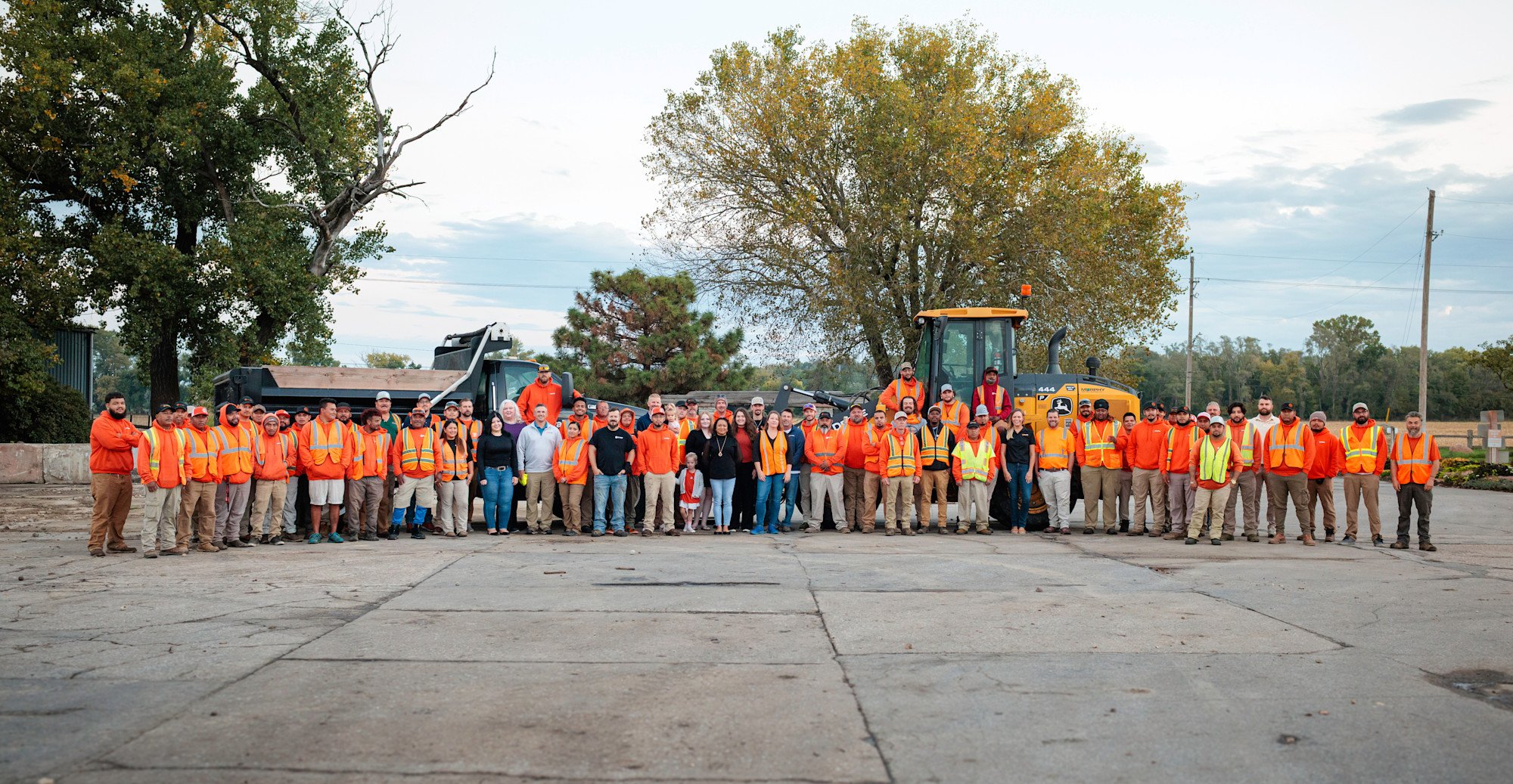
Image credit: Colin Conces, Sun Valley Landscaping
The number nobody's writing about
Jon Gohl has spent 12 years at Aspire, and he is the director of customer experience. He talks to contractors across the country about how their businesses are performing, and when market pressure comes up, the conversation rarely stays on fuel for long.
"Their biggest issue still is labor," Gohl said. "That’s always the No. 1 challenge."
Fraynd agrees. Labor costs at Sun Valley are up 53% since 2019. That figure does not generate headlines. It does not trigger news segments. It shows up month after month in job costing reports, in renewal conversations, in the gap between what a company estimated and what it actually paid to get the work done. And while fuel prices are volatile and price spikes can be short-term, labor rates tend to not decrease.
"I find a lot of contractors will charge a fuel surcharge and then not do a renewal increase, even though their labor costs are going up," Fraynd said. "It tells me you don't know your numbers well enough."
That observation points to a problem more fundamental than fuel.
Contractors who do not have real-time visibility into job costs, labor rates and materials pricing are making pricing decisions based on habit or fear, not data. When a commodity spikes, they reach for the most visible lever. The less visible ones, the ones that have been moving for years, go untouched.

Image credit: Colin Conces, Sun Valley Landscaping
What knowing your numbers actually changes
Tabitha McComas, solutions engineer manager at Aspire, works with landscape contractors who are evaluating new software. She hears the same gap described repeatedly.
"We'll ask, 'How are you job costing? Is it during the job? Is it after the job?'" McComas said. "And they might even laugh, because it's not happening at all. It is such a time-consuming process for them to do outside of a system."
Job costing is Aspire’s real-time comparison of each job’s estimated labor, materials, subs, and equipment costs to the actuals captured from field time, allocations, and purchasing so operators can see variance and profitability at the work ticket and contract levels.
When those contractors see what real-time visibility looks like, the response is usually the same.
"Most of them say, 'Wow, retrieving data would have taken days or weeks,'" McComas said.
For contractors already using a system like Aspire, that visibility changes specific decisions. Items catalogs, Aspire’s centralized list of labor, material, equipment, sub, and kit items used in estimating, purchasing, and job costing, get reviewed. Material costs get reviewed and adjusted to reflect today’s numbers. Labor rates get tracked at the employee level, not just as company-wide averages.

Fraynd, president of the National Association of Landscape Professionals Foundation and a former member of the NALP board of directors, described the discipline the platform imposes as one he now relies on.
"I love that it won't let you do things the wrong way," he said. "The end-of-month process, it made me cry, I'm going to be honest, a couple of times when we first started. And now I love it, because it's like you cannot hide."
That accountability runs through the full revenue cycle. Gohl frames it simply: Sell the work, perform the work, get the cash. The failure point for many contractors is somewhere in the middle.
"We leave no ticket behind," Gohl said, referencing a Grunder Landscaping principle he keeps posted in his office. "We don't forget to schedule a job. Because we have the tickets, we can see what needs to be scheduled, so we're not failing to schedule something, which means perform work, which means generate revenue."
In a pen-and-paper or spreadsheet operation, a completed job can sit in a folder in a truck for four days before it reaches an invoice queue.
"I always say, 'If I ain't invoicing, they ain't paying, which ultimately impacts cash flow'" McComas said.
In a connected system such as Aspire, the trigger to invoice fires when the work ticket closes.
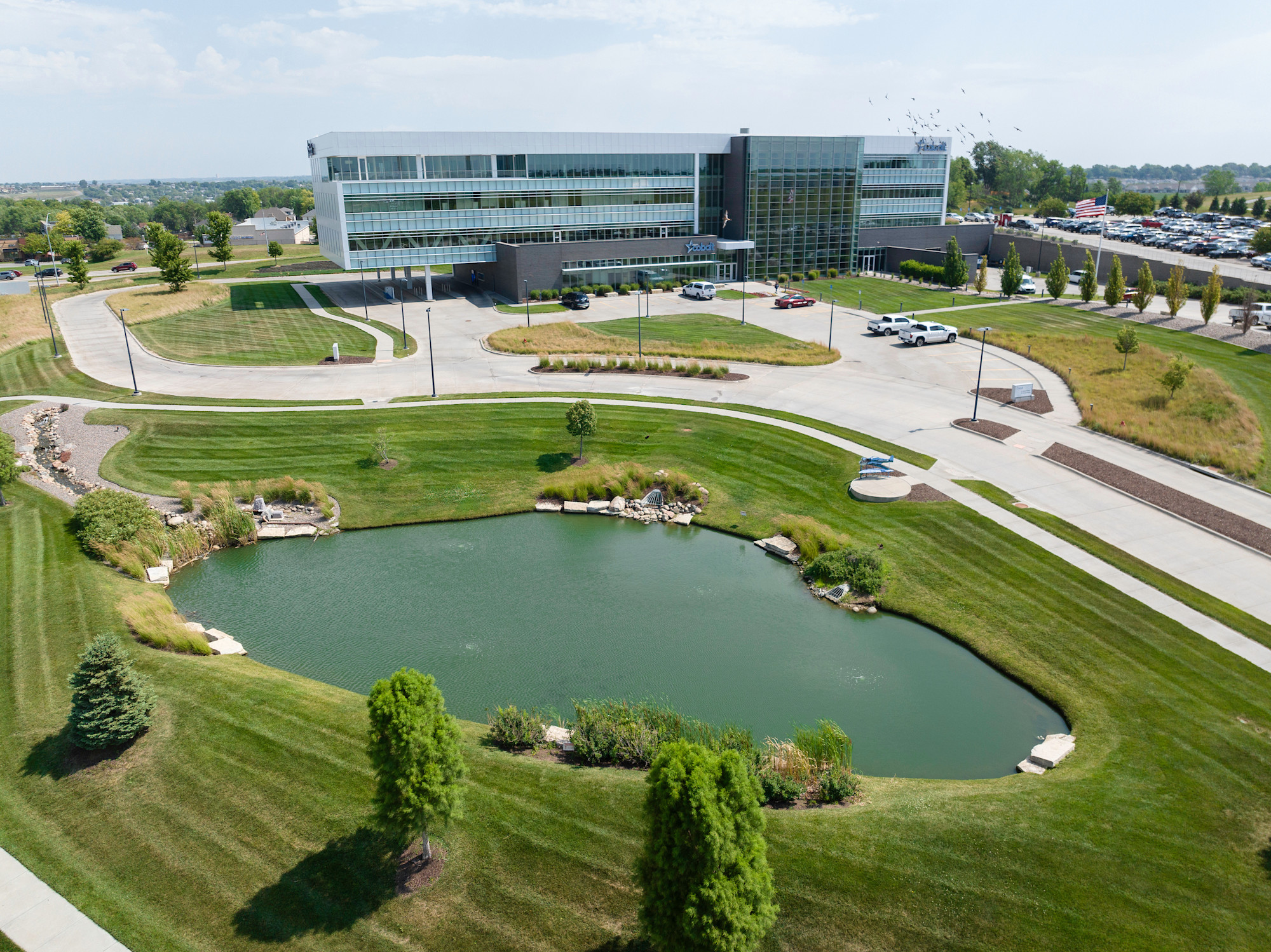
Image credit: Colin Conces, Sun Valley Landscaping
The opportunity in other people's panic
Fraynd tries to stay away from attention-grabbing headlines. What he does monitor is his market: the economic health of Omaha, the behavior of his customers, the signals his own data is sending.
When uncertainty rises around him, his instinct is not defensive. It is competitive.
"If my top competitors are worried about fuel surcharges and oil prices, and I'm focused on the customers I want to take from them, I know which strategy I would prefer," he said.
This spring, Sun Valley's account managers began reaching out proactively to property managers with a simple message: Are you seeing unexpected surcharges from other companies? Is there anything we can do to help? On the week Fraynd spoke, Sun Valley picked up a new account from that outreach.
Fraynd has watched the same dynamic play out before. During COVID, when demand for landscaping services surged and many operators pulled back, he wished he had been more aggressive on fleet investment and growth. He was paying off debt when capital was cheap. He has not made the same calculation twice.
"The time to be aggressive is when other people are worried," he said.
McComas sees a version of this in every demo she runs for a contractor who is not yet on a platform with real-time visibility. They often discover that a long-standing customer relationship, one they would have described as among their best, is actually unprofitable.
"Once they're on Aspire and they have that visibility into every cost going into those contracts, so often they come back and say, 'My best relationship wasn't even a profitable contract for our business,'" McComas said. "If they won't let me raise their prices, I've become a more profitable business" by cutting it.

Image credit: Colin Conces, Sun Valley Landscaping
The practical response to a complicated spring
Fuel prices, tariffs, labor costs, and softer consumer sentiment generate real pressure. What separates operators who move through them from those who get stuck is rarely a single decision. It is whether the decision-making is based on data or on headlines.
For contractors on maintenance-heavy books of business, Gohl points to contract renewal as the right place to address cumulative cost increases, whether from fuel, labor or materials.
"We're going to have to live with the cost now, and then reevaluate that when we renew our contracts next year," he said of operators in Fraynd's position.
For those who want a surcharge mechanism available if prices continue to climb, Aspire supports it. A contractor can set a threshold such that if fuel reaches a specific price per gallon, a percentage surcharge applies to maintenance invoices in bulk.
“It’s OK to have this in the contract,” Fraynd said. “The problem is not being transparent ahead of time with customers.”
McComas, in agreement with Fraynd, said having the language in the contract terms before the trigger matters, not after.
She walked through the tool: Batch-select the relevant invoices in the invoicing assistant, add the surcharge line item as a percentage or flat dollar amount, send.
For those weighing whether any of this changes their approach right now, Fraynd's answer is steady.
"We just read the market," he said. "We've recently made changes to the way we price landscape projects because of market feedback. It wasn’t because of the news; it was because we tried stuff. One way didn't work, one way did, so we went with the one that did."
Sun Valley Landscaping has been in business for three decades, and Fraynd plans to be in it for 30 more. The fuel price this week, whatever it is, is a detail in a much longer calculation.
"This is just a blip on the radar, all things considered," he said. "If we can gain market share from it, that's way more exciting than getting 6% a visit and dealing with all the angry phone calls."








 866-727-7473
 Schedule Demo
 390 S Woods Mill Rd #300 Chesterfield, MO 63017


